
Burlington Neighbors Across Official Rolls
No public roll lists every household on a Burlington block. Each office keeps one piece. County GIS shows which parcels touch. The Assessor adds assessment and deed-holder labels, while the Treasurer tracks the tax account. A current voter tool can confirm one person's registration and polling details when the required inputs are known. But it is not an open block roster. Community bodies publish events and district context rather than private member lists.
| Source | What it reveals about a block | How to reach it |
|---|---|---|
| Des Moines County GIS | Parcel shapes, nearby lots, historic imagery, measurement, and map relationships | Free dynamic map; GIS office for help or data request |
| County Assessor | Deed holder, contract buyer, physical address, parcel and assessment clues | Free address search; office, phone, or email fallback |
| Iowa Treasurers | Owner field, site or legal address, parcel district, tax year, and payment detail | Free parcel search; registration optional |
| Election records | Individual current registration and polling details; approved list fields | SOS lookup or paid, purpose-limited list request |
| Civic and preservation records | Dated district, permit, meeting, inventory, or property-action context | City archive, Downtown Partners, commission, or Chapter 22 request |
Owner, taxpayer, mailing addressee, and occupant are separate roles. One person can hold all four. A public record never guarantees that overlap. A careful block file notes the portal, the displayed date or tax year, the parcel number, and the exact field label beside every result.
Map Burlington Neighbors Parcel by Parcel
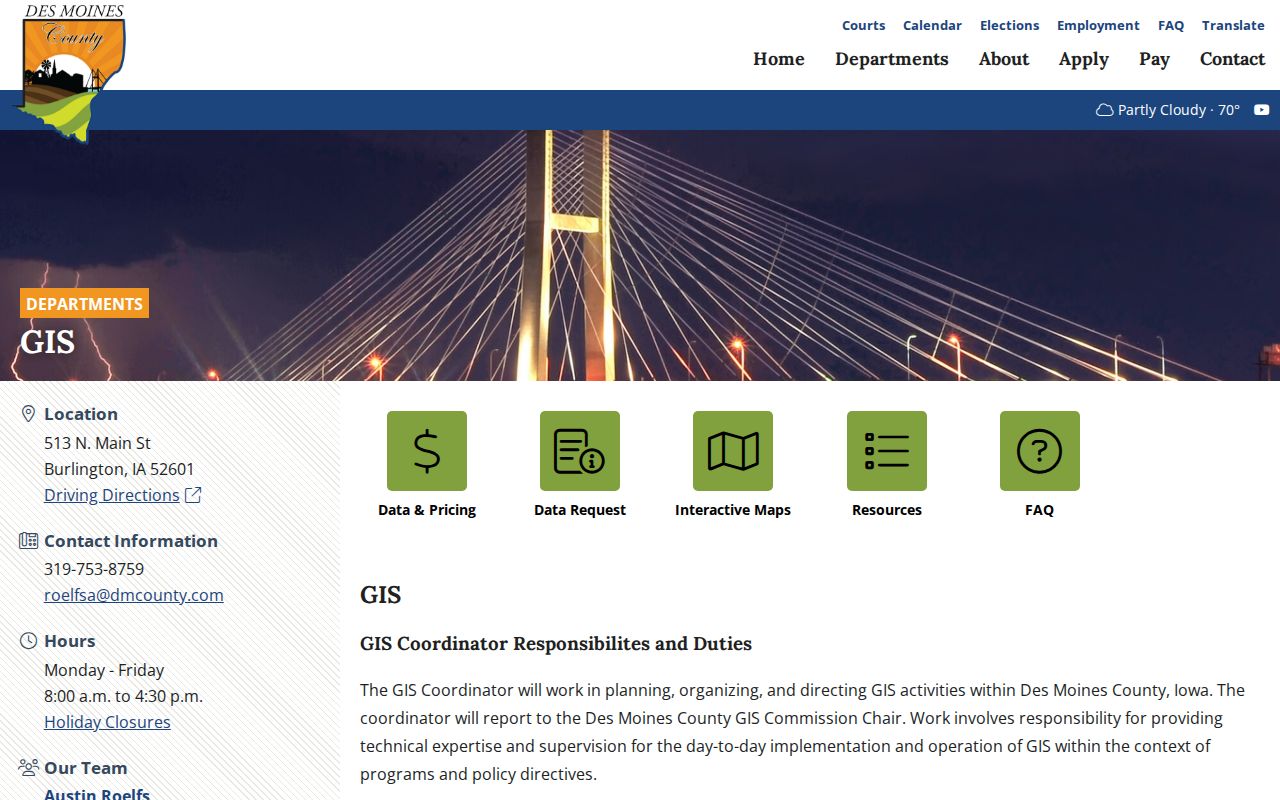
The Des Moines County GIS department links the mapping app and offers staff support at 513 N Main Street. Click a parcel to identify it. The viewer also measures, draws, and exports a PDF. Historic basemaps and Pictometry imagery sit alongside the base layers, and dynamic field labels load only during a live query. Trust just what the live search shows.
- Enter the starting address in the county mapping app, or locate it from the street and click the parcel.
- Save the parcel number and date. Click each lot that shares a boundary, then expand only as far as the block question requires.
- Repeat each parcel number in the Assessor and Iowa Treasurers systems. Note which source labels a deed holder, owner, site address, mailing field, or tax account.
- Return to GIS for layers or imagery that explain alleys, split lots, flood context, or historic street form. Do not infer a resident from the map alone.
The captured GIS department page identifies the local custodian behind the parcel tools.
For a complete named-street workflow rather than the immediate block, the Burlington street directory covers addresses in order. Keep this parcel search focused on adjoining lots.
Crosswalk Burlington Block Records
The parcel number is the safest bridge between the map, the assessment roll, and the tax account. The Assessor form accepts many inputs. PIN, deed holder, contract buyer, house number and street name, city, legal description, block, lot, section, township, range, and acreage range all work. An all-parcels or photos-only filter is available too. Too many fields can screen out a hit. Begin with the address. Add one field at a time. The Iowa Treasurers search is separate. It takes owner name, parcel number, receipt number, or property street address, and parcel mode handles up to ten numbers. A result may show the parcel-number district, site or legal address, tax year and type, annual amount, installment status, receipt references, and an assessment link. None of that proves the named owner lives there; these are tax-account fields only. For tax lookups, start with the Iowa Treasurers parcel search.
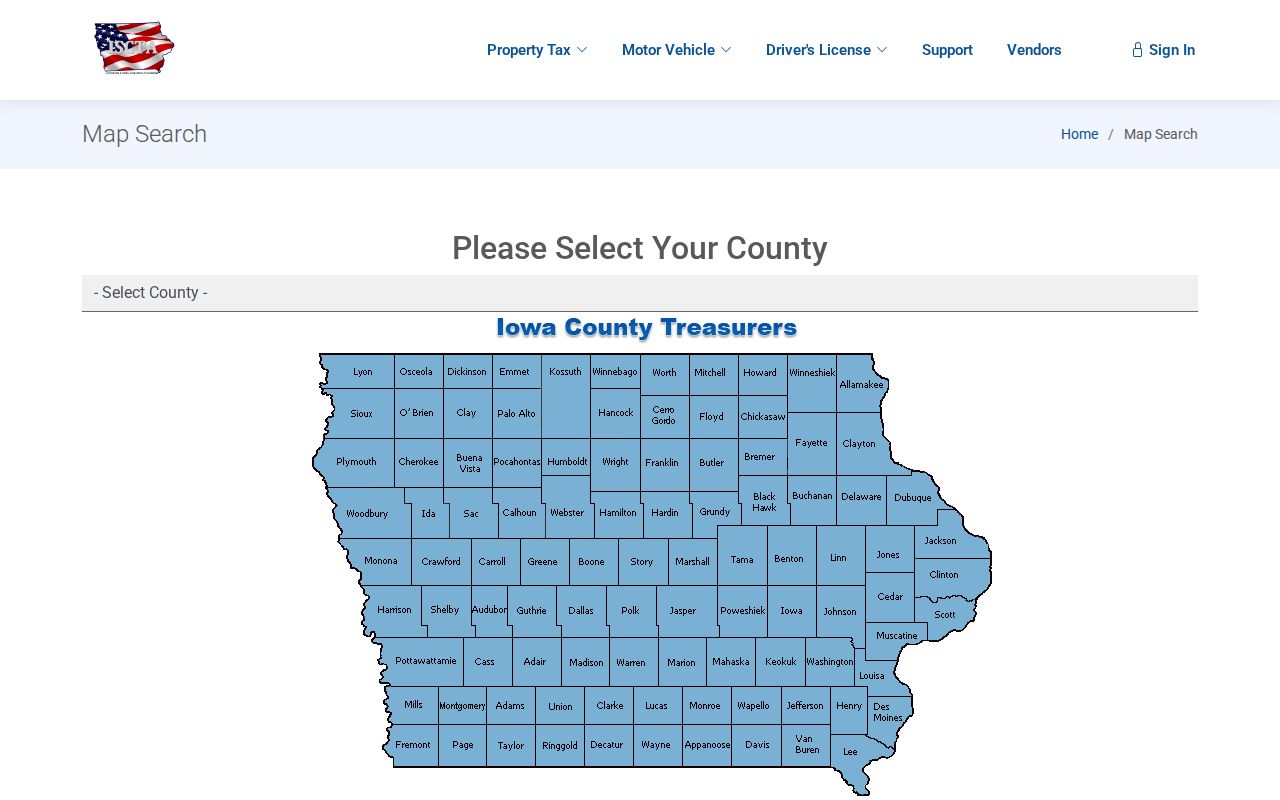
Save the displayed tax year. Offices update on different schedules for different tasks, so a stale tax account and a newer assessment record can disagree.
See Burlington Blocks Through Time
Today's parcel lines do not describe every earlier block. Burlington Public Library holds an 1873 Illustrated Historical Atlas, plat books, and Sanborn maps dated 1886, 1892, 1900, and 1931. Additions run through 1950. Those sheets show buildings, uses, and alleys. County GIS adds Pictometry views from 2008, 2009, and 2012, plus 2008 flood imagery. A river and bluff city rewards this layering. Burlington, West Burlington, and rural county parcels rarely describe the same geography. Postal labels and city limits differ too. Snake Alley, Heritage Hill, the riverfront, and downtown are dated place or district terms. They are not shortcuts for a current legal boundary. Always check the map year and the body that drew it. Burlington street numbering also changed in 1938. An old directory may point to a block that seems wrong. When that happens, consult the map. Keep the historic number instead of silently substituting a modern one.
Burlington Neighbors and Civic Groups
Official city pages carry no complete directory of Burlington neighborhood associations or HOAs. That gap matters. Neither group is a household roster. Downtown Partners Inc and the Historic Preservation Commission still serve as useful civic umbrellas, so ask each organization for its own public contact instead of inferring members from event, permit, or property data.
Downtown Partners Inc
610 N 4th Street
319-752-6365
A Greater Burlington Partnership division focused on downtown preservation, revitalization, design, promotion, and economic work. No household membership roster was located.
Historic Preservation Commission
City of Burlington public body
Use commission pages, agendas, minutes, inventories, surveys, and certificates of appropriateness for dated public property actions.
Heritage Center Museum
501 N 4th Street
319-752-7449
The Des Moines County Historical Society holds archives, artifacts, and local stories. Ask for a collection title, appointment, and copy rules.
The Des Moines County Historical Society provides the archival community layer shown below.
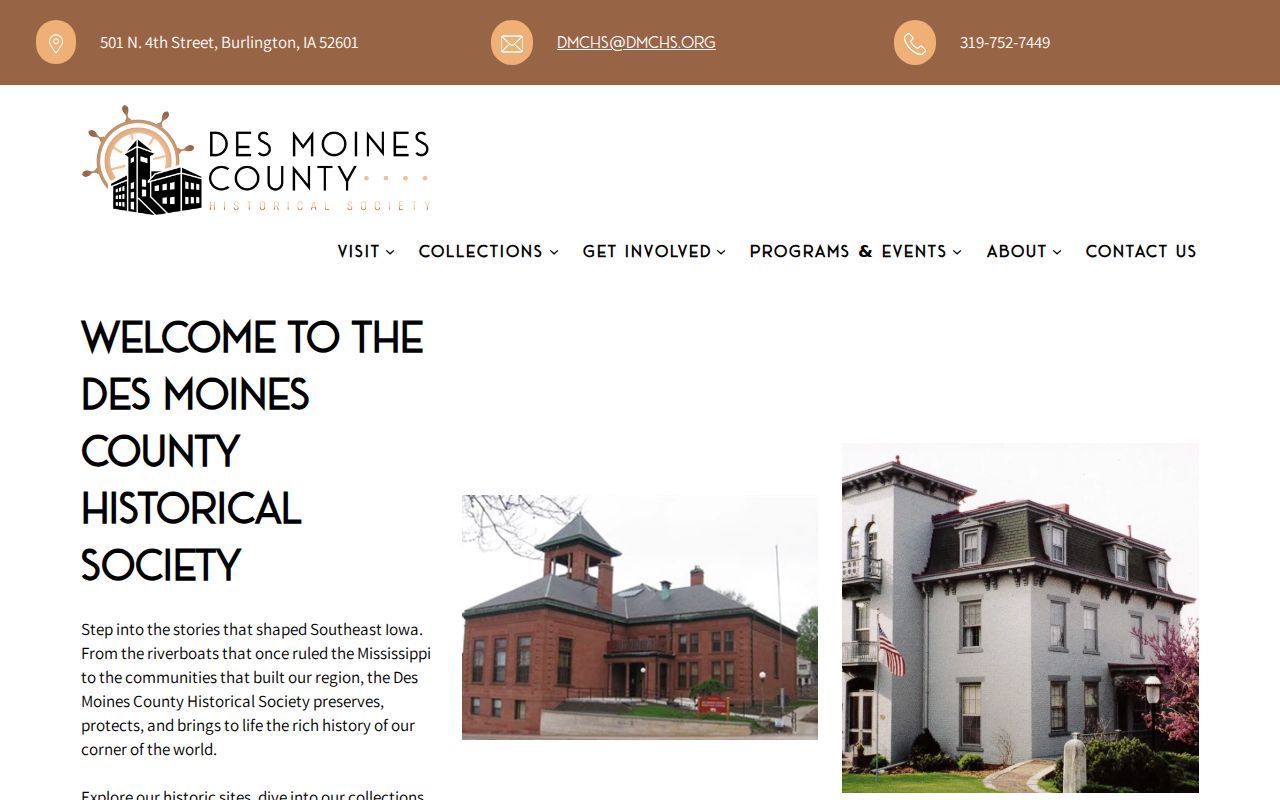
The museum and archive add local context. Recorded land and parcel fields still belong to the Recorder and the county rolls.
Track Burlington Block Changes
A demolition, addition, sign, fence, or preservation review often explains a changing block. Burlington's monthly permit archive covers January 2021 through April 2026, plus older material. A report can include a permit date, owner field, parcel, and project description. Community Development routes permit work through OpenGov. Building, plumbing, electrical, mechanical, sign, fence, and demolition jobs all pass through it. The dynamic permit portal publishes no complete historical result schema. If an address search stalls, send a narrow request. Address it to the City Clerk or Community Development. Name the parcel, permit type, and date range. Say which field you need. Iowa Code Chapter 22 allows inspection or copying of nonexempt records. Requests may be oral, written, email, or other electronic. Fees and exemptions can still apply.
Voter Data Is Not a Neighbor List
Iowa's public voter lookup takes a first name, a last name, and a ZIP code. House number and full birth date help separate people with similar names. What comes back is registration and polling information for that one person. It does not support a casual address-only sweep of Burlington neighbors. That limit is deliberate.
A formal voter-list request works differently. You pick the jurisdiction and the fields. You state an intended use and choose delivery and payment options. The form sets a $10 minimum. It generates voter lists each Monday and produces absentee lists daily during early voting. Processing can take up to 14 days. Social Security numbers stay out of the output. So do state voter IDs, driver's-license numbers, and non-operator IDs. Safe at Home can also shield an actual address.
Treat election data as valid only for its stated purpose and date. A registration record proves none of the things people assume. It does not prove the person is present now. Nor does it show who owns the parcel or that the person never moved away.
Official Burlington Neighbors Evidence
Commercial neighbor tools blend old directories, marketing data, and public files into one feed. The dates and sources rarely come with clear labels. Official systems are narrower. Yet each record names its custodian, and every label can be checked against the source. For a careful block record, that beats a merged list. But you may need several searches to build it.
| Source type | Strength | Main limit |
|---|---|---|
| County GIS, Assessor, and Treasurer | Dated parcel geometry, assessment, and tax-account fields | Owner or taxpayer is not necessarily the occupant |
| Recorder and Iowa Land Records | Recorded instruments and party chain | Free account; modern online cutoff not published |
| City and civic records | Dated permit, district, meeting, or preservation action | Applicant or speaker is not proof of residence |
| Commercial compiled tool | May combine many sources quickly | Source dates, corrections, and role labels may be unclear |
For Burlington neighbors, keep the original record label and the source link together. When two official systems disagree, write down both dates. Then ask the custodian instead of picking whichever name looks most plausible.
Protect Burlington Neighbors' Privacy
Iowa Code Chapter 22 opens the door to most nonexempt public records. Section 22.7 carves out exceptions. Access alone does not make every field safe to publish. Utility and delivery records are not ordinary neighbor rolls. A parcel file lists owners, not the renters, relatives, or others who share a home. So a Burlington residents directory built from property rolls alone stops short. It will never show a full household.
Safe at Home is the caution flag here. The program gives qualifying survivors a substitute address, mail forwarding, and confidential voter registration. If a record hints at a protected address, stop and leave it alone. Never piece together GIS layers, mailing fields, permits, or voter rolls. Do not use them to guess where someone lives. Point the person to the official confidentiality program instead.
Lawful use. Use Burlington neighbor records for civic awareness, block history, or personal safety, never to watch, intimidate, harass, or harm anyone.